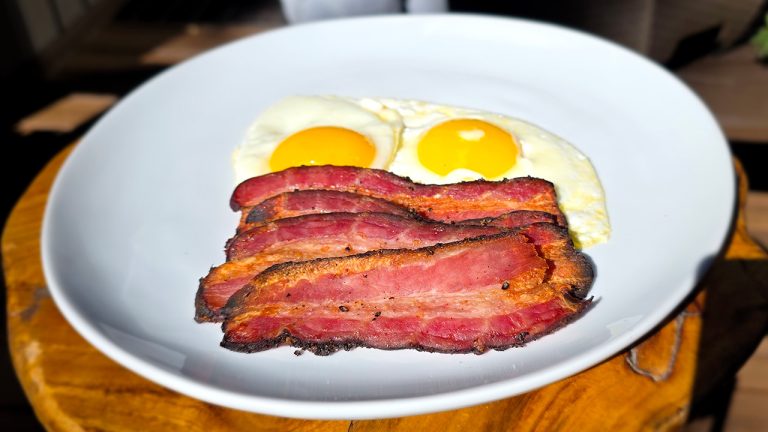
Ingredients
- Approx. 10 lbs Skinless Pork Belly
- 1 cup Salt (1 1/4 cup Coarse Kosher Salt)
- 1 cup Sugar
- 1 gallon water
- 2 tsp Pink Curing Salt No. 1 (Prague Powder)
- 1/4 cup cracked Black Pepper (as desired)
Optional 8 oz Molasses, 1/2 gallon Apple Cider
Instructions
Prepare The Brining Solution
In a large non-reactive pot, bring half a gallon of water, sugar, salt, Pink Curing Salt No. 1 (Prague Powder) (and the molasses if prefer a sweeter version) to a boil or until all solids are dissolved. Set aside until cooled to room temperature.
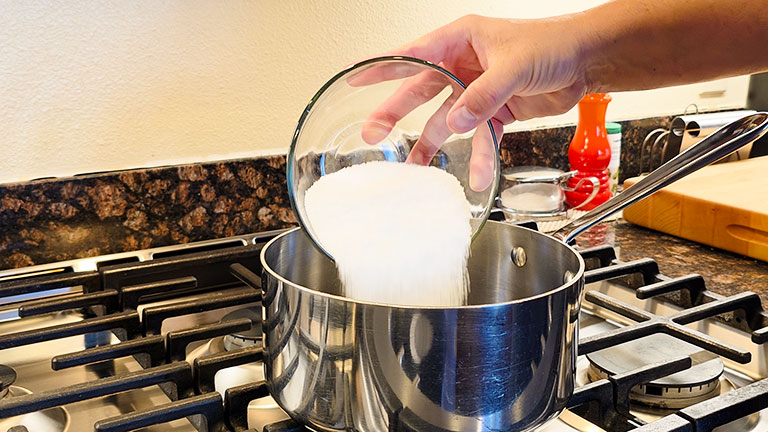
Once ready, measure the second half a gallon of water or the apple cider if you used molasses in the first step. If I use water, I like to add ice cubes to my measuring cup to help cool down the whole solution even faster. I would not recommend using ice cubes with apple cider to prevent diluting it.
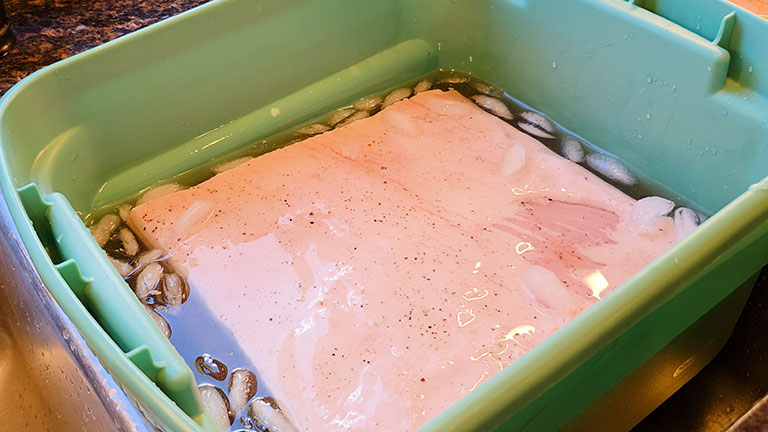
Pour both all liquids into a large food safe plastic container big enough to fit not only the pork belly but also in your refrigerator. In my case I split the pork belly in half, not only to fit the box but also to fit into my smoker.
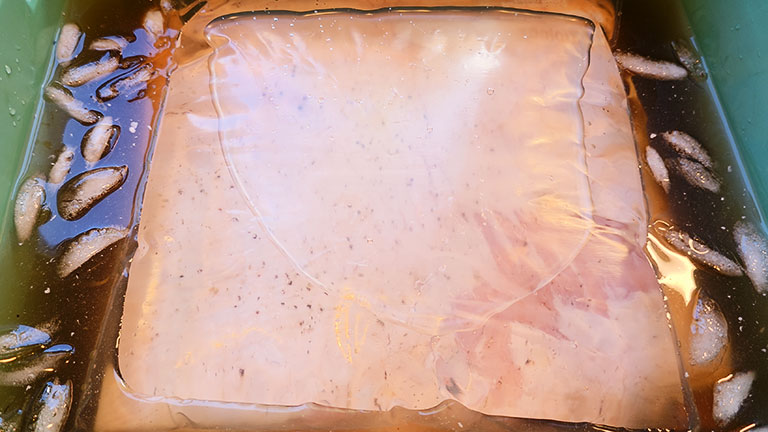
I like to place a gallon size ziplock bag filled with water on top of the belly to keep it submerged. Cover it and place in the refrigerator (40 degrees F or less) for 7-10 days.
The Day Before Smoking
Thoroughly rinse the pork belly and pat it dry with paper towels. Place it on on a half sheet pan ideally fitted with a cooling rack so that air circulates top and bottom. Put it in the refrigerator for 24 hours to dry and form a little pellicle that will help in the smoking process (don’t be concerned if you can’t see any pellicle).
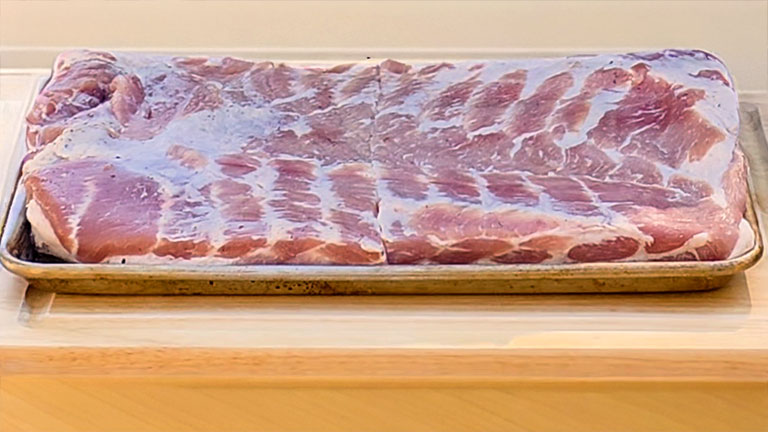
Smoking Day!
Preheat the smoker to 175-180F degrees (do not exceed 200F).
Remove the belly from the refrigerator and press cracked black pepper on the top of the pork belly. This is an optional step but I like the subtle flavor the pepper gives to the bacon, it is not the same if you skip this step.
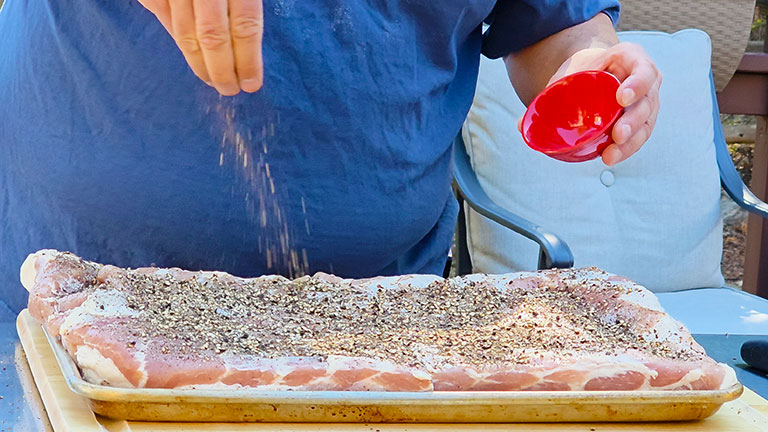
If you have them, insert your thermometer probes into the belly, or each belly cut if you split it to keep an eye on their temperatures. If your thermometer has it, also place the air probe in the smoker chamber to monitor the actual smoker chamber temperature, I like to do this since I don’t trust my smoker built-in gauge.
Smoke the bacon for 3+ hours or until the internal temperature of the bacon reaches 150 degrees F. Depending on your smoker, add a handful of wood chips every time the smoke subsides.
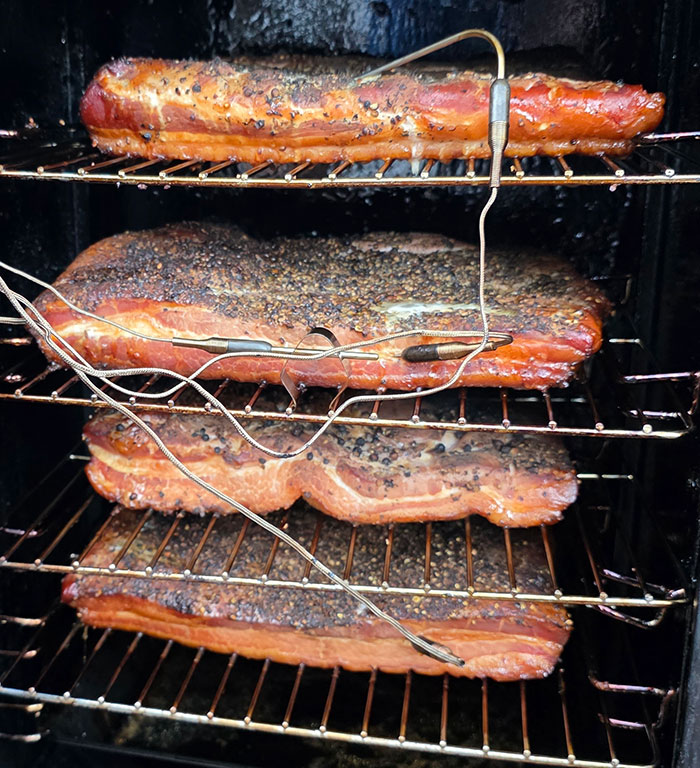
Once the bacon reaches an internal temperature of 150 degrees F, transfer the bacon to a plate, wrap it tightly in several layers of plastic wrap and place it in the refrigerator for 2 days.
I like to partition my bacon into bricks of about 1 lb. each. I wrap them in parchment paper and then in heavy duty aluminum foil, write the date on each packet and place them in the freezer. Another option if you have it is to use a vacuum sealer.
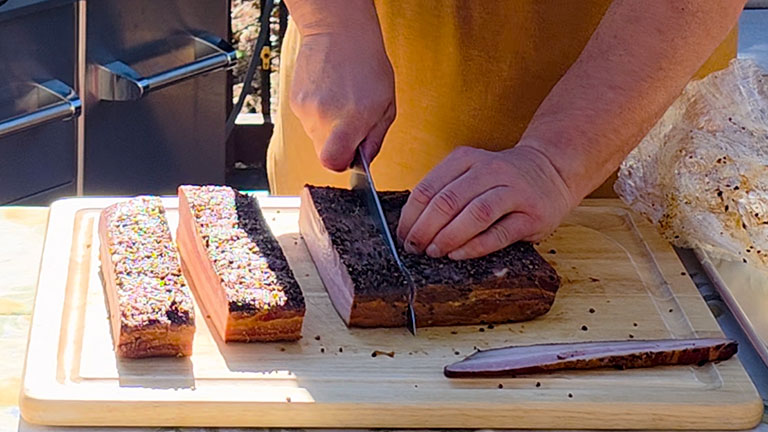
When ready to cook, defrost a brick, slice the bacon and fry as you normally would.
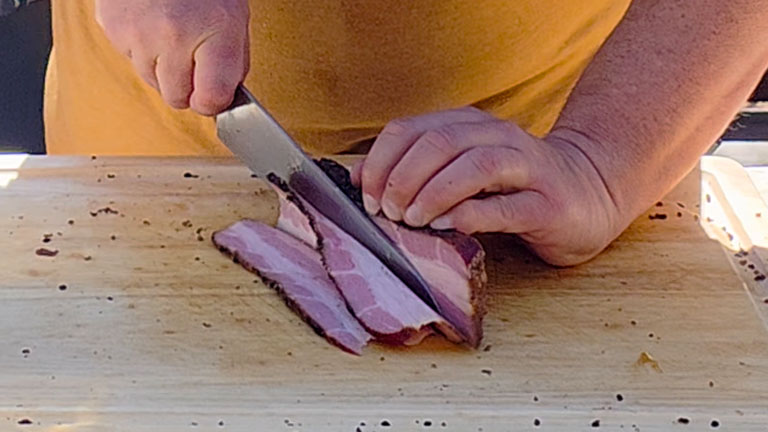
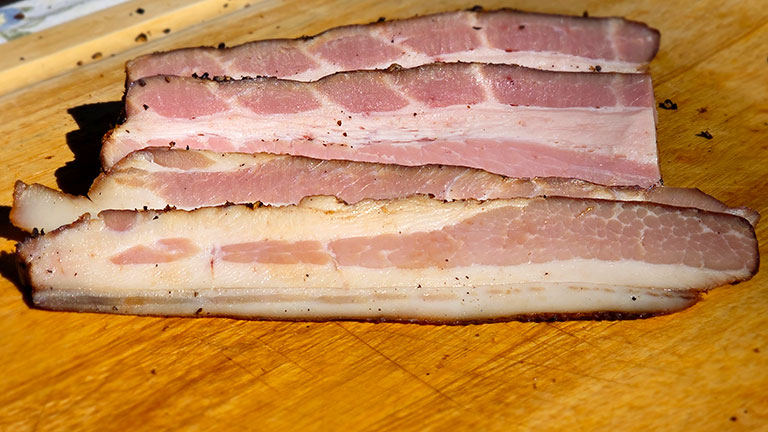
Buon Appetito!
Notes
If you want to add molasses, substitute 1/2 gallon of water for 1/2 gallon of apple cider
- Category: Smoking
- Method: Smoking
- Cuisine: American